

The other day, someone in the GMA Discord mentioned this verse:
4 a time to weep, and a time to laugh;
Ecclesiastes 3:4 ESV
a time to mourn, and a time to dance;
I have been ruminating on this verse as the school year comes to an end. Ask any teacher; this school year has been a particularly difficult one. Teaching during a pandemic involved several adjustments because of the various precautions school districts rightfully put in place to protect staff and students. I will admit that my streaming experience helped with teaching online classes while teaching in-person students simultaneously; however, I found myself exhausted by the time the last day of school came and went. We’ve officially moved on to looking forward to next year now that the Class of 2021 graduated last Saturday, and I am relieved that this next year will look more like your normal school year.
But, as I rest and reflect going into the summer, I am also mourning the end of this school year. I don’t think the author of Ecclesiastes mistakenly juxtaposed weeping and laughing, mourning and dancing. Often, there’s a bit of both in any given situation.
So Much Grief Is Hard
There has been much to mourn, to grieve, in the last year. At the time of writing this post, almost 600,000 people in the USA have lost their lives to COVID, which is a horrible tragic loss. I can say with almost complete certainty that we all know someone who has passed from COVID or at least know someone who knows someone. Yet, the losses of the year were not only the lives we’ve lost to this disease. Looking back to the end of the 2019–20 school year, seniors lost their final term at school, their proms, their final seasons of sports, etc. My daughter’s first year of life was lived at home without much social interaction. Businesses have closed all around the USA. We just lost our favorite small coffee shop in the downtown area of our town.

So much has gone and changed over the last year that a lot of us are becoming fatigued by so much grief. COVID fatigue has been on the radar for mental health professionals for months. Grief on its own is known to produce fatigue in general, but grief after grief can be like wave after wave pulling you down, so much so that the natural reaction might be to develop a “thick skin” to grief and loss because we just cannot even with one more loss or change. I know I have been there, particularly with the end of the school year. I just couldn’t interface with the fact that the year was ending because I had already jumped through so many hoops to survive the year. So I walked out of the school when I could and didn’t look back. We celebrated big and loud in the following days.
Grief is a Part of Life
In the days since then, I have found myself feeling the typical grief that accompanies the end of every school year. I had to say goodbye to students, many of whom will not ever step foot into my classroom again. Gone are the conversations had before or after class about their lives. These conversations are why I became a teacher if I’m honest. Don’t get me wrong; I like teaching. But I love getting to know my students, getting to hear about their lives: the good and the bad. Tea Time with Mr. C is a daily occurrence in some of my periods. I live for it, and I mourn the change in these relationships at the end of every school year.
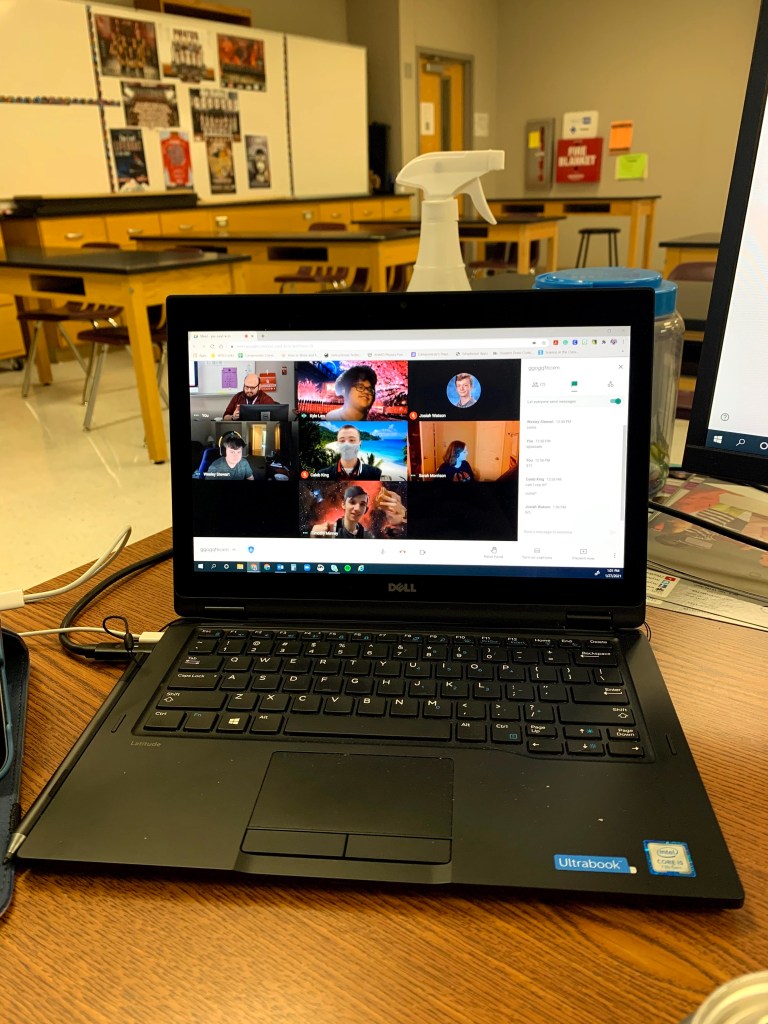
A glimpse of some of the kiddos I’ll miss: my D&D campaign from this year.
Except, this year I didn’t think I should mourn anything about this school year. It was a hard one. We all went through a lot, so we should celebrate that it’s over. I have celebrated, but I also feel the grief that so normally accompanies any kind of ending. This is why I find verses like Ecclesiastes 3:4 so poignant: the juxtaposition of grief and joy is not meant to be an either-or situation. No, these two emotions can happen side-by-side. I say that because I believe the author of Ecclesiastes is employing a feature of Hebrew poetry called synthetic parallelism]—where the first line states an idea and the subsequent lines add to that idea. The author of Ecclesiastes does not see these times as distinct or disparate. There’s no compartmentalization of the human experience. Instead, these are (as E. Carson Brisson put it in “Ecclesiastes 3:1–8” in Interpretation, vol 55, no 3) all spokes of the same wheel that constitutes the entirety of the human experience. The wheel spins offering ordered grief and joy, so we have an invitation to experience both!
No Shame in Complex Emotions
So, as shouldn’t surprise anyone, I have complex emotions: happiness that I am on summer break after this COVID year but also sadness that my students will move on from my classroom. I am thankful though that I can look to Scripture and see affirmation that such complexity is how it should be. The world is a complex place, and humans are complex beings. I hope that as you wrestle with your own complex emotions in this new, somewhat post-COVID world that you give yourself room to feel everything that is coming your way. Don’t try and tell yourself that you should feel one way or another about a certain situation; instead, grasp that you can feel two things at the same time and live in that tension. It’s a weird place to be, but it’s good.
My prayer for you this season is this:
Oh gracious Father, thank You for Your steadfast love and grace through this difficult year. Give to us, your children, the time to see You in the good and the bad. May we lean into your gifts of joy and grief, knowing that this season will eventually pass and a new time will come. Be with those who are mourning, Father. Comfort them as You said through Your Son. In Christ’s name, Amen.
For more on grief in these crazy COVID times, I would recommend my pastor’s sermon series: “Amidst the Chaos” which you can find here.



 Allention